
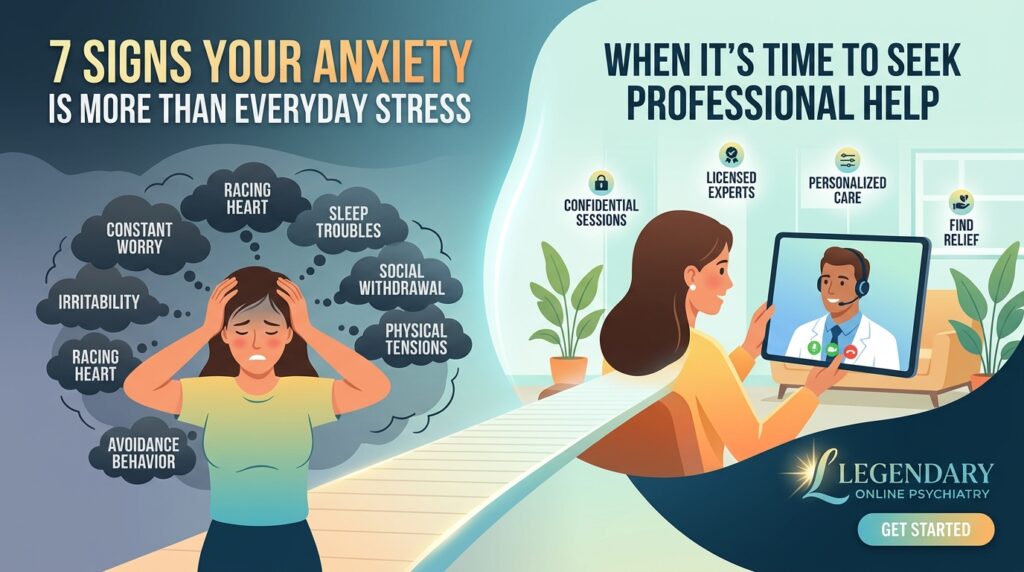
The phrase 7 Signs Your Anxiety Is More Than Everyday Stress has become increasingly important as more people struggle with emotional exhaustion, panic, sleep problems, and constant worry. While stress is a normal part of life, anxiety can quietly grow into a long-term mental health condition that affects relationships, work performance, physical health, and emotional well-being. 7 Signs Your Anxiety Is More Than Everyday Stress and What You Should Do
Understanding the 7 Signs Your Anxiety Is More Than Everyday Stress can help you recognize when it is time to seek professional psychiatric support instead of simply “pushing through” the symptoms.
At Legendary Online Psychiatry, individuals can access convenient online mental health care, medication management, and professional psychiatric evaluations from the comfort of home.
Why Understanding the 7 Signs Your Anxiety Is More Than Everyday Stress Matters
Many people assume anxiety is simply part of a busy lifestyle. However, chronic anxiety disorders are different from temporary stress because the symptoms often continue even when there is no immediate problem.
Common anxiety-related symptoms include:
- Excessive overthinking
- Racing thoughts
- Emotional burnout
- Panic attacks
- Insomnia
- Irritability
- Difficulty concentrating
Recognizing the 7 Signs Your Anxiety Is More Than Everyday Stress early may help prevent symptoms from becoming more severe over time.
According to the National Institute of Mental Health, anxiety disorders are among the most common mental health conditions in adults.
Constant Worry That Never Seems to Stop
One of the clearest examples within the 7 Signs Your Anxiety Is More Than Everyday Stress is persistent and uncontrollable worry.
Unlike temporary stress, anxiety-related worrying often:
- Lasts for weeks or months
- Happens without a specific reason
- Feels mentally exhausting
- Disrupts focus and productivity
People experiencing chronic anxiety frequently replay conversations, fear worst-case scenarios, and struggle to relax mentally.
This ongoing mental tension can impact confidence, decision-making, and emotional stability.
Physical Symptoms Start Affecting Daily Life
Many people do not realize anxiety can produce strong physical symptoms. In fact, physical discomfort is one of the major reasons individuals begin researching the 7 Signs Your Anxiety Is More Than Everyday Stress.
Common physical anxiety symptoms include:
- Chest tightness
- Increased heart rate
- Headaches
- Muscle tension
- Digestive problems
- Sweating
- Fatigue
When anxiety keeps the body in a constant “fight or flight” state, it can become physically exhausting.
The Centers for Disease Control and Prevention explains that chronic stress and anxiety may negatively affect overall health if left untreated.
Avoiding Situations Because of Fear
Avoidance behavior is another major warning sign.
Individuals experiencing anxiety may begin avoiding:
- Social events
- Work meetings
- Phone conversations
- Public speaking
- Traveling
- Difficult conversations
At first, avoidance may feel comforting. However, over time it often increases fear and reduces confidence.
The 7 Signs Your Anxiety Is More Than Everyday Stress become more noticeable when anxiety starts limiting personal growth and daily functioning.
Interestingly, mental wellness requires regular attention just like maintaining customized dirt bike graphics. Riders care for every detail of their bikes to improve performance and confidence, and mental health deserves the same level of proactive care and maintenance.
Sleep Problems Become Consistent
Occasional stress may interrupt sleep temporarily, but anxiety often creates ongoing sleep difficulties.
Symptoms may include:
- Difficulty falling asleep
- Racing thoughts at night
- Frequent waking
- Nighttime panic
- Feeling tired after sleeping
Poor sleep can worsen emotional regulation, concentration, and physical health.
Many people researching the 7 Signs Your Anxiety Is More Than Everyday Stress discover that chronic sleep disruption is one of the earliest warning signs they ignored.
Panic Attacks Start Happening Unexpectedly
Panic attacks are intense episodes of fear that can feel overwhelming and frightening.
Symptoms often include:
- Rapid heartbeat
- Shaking
- Chest pain
- Difficulty breathing
- Dizziness
- Fear of losing control
Some individuals mistakenly believe they are experiencing a heart attack during severe panic attacks.
Recurring panic attacks strongly suggest symptoms may go beyond normal stress levels. Within the 7 Signs Your Anxiety Is More Than Everyday Stress, panic attacks are often one of the most serious indicators that professional psychiatric support may be beneficial.
Anxiety Begins Affecting Work and Relationships
Another important warning sign is when anxiety starts interfering with everyday responsibilities and relationships.
This may include:
- Difficulty concentrating at work
- Increased irritability
- Missed deadlines
- Social withdrawal
- Relationship conflicts
- Reduced motivation
High-functioning anxiety can be difficult to identify because many individuals continue appearing successful externally while struggling internally.
The 7 Signs Your Anxiety Is More Than Everyday Stress often become undeniable when anxiety begins impacting emotional connections and professional performance.
Emotional Exhaustion Feels Constant
Feeling emotionally drained every day is not something to ignore.
Anxiety can create:
- Constant nervousness
- Emotional fatigue
- Difficulty relaxing
- Persistent fear
- Mood swings
- Lack of enjoyment
Among the 7 Signs Your Anxiety Is More Than Everyday Stress, emotional exhaustion is one of the strongest indicators that mental health support may be necessary.
Long-term emotional strain can also increase the risk of depression, burnout, and chronic stress-related health issues.
How Online Psychiatry Can Help
Modern online psychiatry services provide flexible and accessible treatment options for individuals experiencing anxiety symptoms.
Professional psychiatric care may include:
- Anxiety evaluations
- Medication management
- Treatment planning
- Lifestyle recommendations
- Mental health education
Online appointments allow individuals to receive support privately and conveniently without the stress of commuting to in-person clinics.
For many people experiencing the 7 Signs Your Anxiety Is More Than Everyday Stress, online psychiatry provides an easier first step toward recovery.
Practical Tips for Managing Anxiety Naturally
Although professional care is important for persistent symptoms, healthy daily habits can support emotional wellness.
Prioritize Sleep
Consistent sleep schedules may improve emotional balance and reduce anxiety symptoms.
Reduce Caffeine Intake
Too much caffeine can increase nervousness and racing thoughts.
Exercise Regularly
Physical activity helps release tension and improve mood naturally.
Practice Mindfulness
Breathing exercises and mindfulness meditation may help calm anxious thinking.
Limit Information Overload
Constant exposure to stressful news and social media may increase anxiety levels.
Combining professional support with healthy habits often produces better long-term mental health outcomes.
Final Thoughts
Recognizing the 7 Signs Your Anxiety Is More Than Everyday Stress is an important step toward improving your mental and emotional well-being.
While occasional stress is normal, persistent anxiety should never be ignored. Symptoms such as panic attacks, emotional exhaustion, constant worry, sleep disruption, and avoidance behaviors may indicate that professional help could be beneficial.
With modern online psychiatry services, support is more accessible than ever before. Early treatment may help improve emotional stability, relationships, focus, confidence, and overall quality of life.
If anxiety has started interfering with your daily routine, seeking professional psychiatric guidance may help you regain control and move toward a healthier future.
Care we provide
Online Medication Management for Astoria, Queens Residents · Virtual Psychiatrist NYC · Primary · Online Psychiatrist Bronx · Telehealth Psychiatry for Astoria, Queens Residents
Communities we serve
Bronx, Ny · Bronx Newyork · Bronx, Ny · Bronx, Ny · Jamaica, Queens · Astoria Queens 11 · Astoria Queens 10 · Astoria Queens 9