
Published November 9, 2026
Telehealth Psychiatry New York: 2026 Guide for Sunset Park, Brooklyn Residents
Telehealth psychiatry in New York lets residents connect with a licensed psychiatric provider by secure video from home, without commuting to a clinic. For most adults and older adolescents in Brooklyn, an initial evaluation can typically be scheduled within days, and New York State Medicaid covers telehealth psychiatric visits, making cost a smaller barrier than many people expect.
A Fourteen-Year-Old in Sunset Park Who Stopped Going to School
Picture a family living on the stretch of 5th Avenue near 47th Street in Sunset Park. The parents, both working long shifts, noticed their teenage daughter had stopped attending her high school near Leif Ericson Park sometime in late 2024. She wasn’t sleeping. She’d withdrawn from the cousins she used to spend weekends with. Her mother had tried calling a local clinic twice, but the earliest in-person appointment available was eleven weeks out, and the office was in a neighborhood neither parent could easily reach by subway during working hours.
The family spoke primarily Spanish at home. The daughter, born in Brooklyn, was comfortable in English but felt safer discussing her inner life in Spanish. Finding a provider who could meet both needs, without requiring a long commute, felt close to impossible.
This kind of situation is more common in Sunset Park than families might realize. According to SAMHSA’s 2022 National Survey, approximately 22.8% of U.S. adults experienced mental illness in the past year, and SAMHSA data shows only 46.2% of U.S. adults with mental illness received treatment in that same year. Among adolescents and young adults, the gap is often even wider, particularly in communities where in-person access is limited by work schedules, language and geography.
The Challenge: What Gets in the Way for Brooklyn Families
Sunset Park sits in a part of Brooklyn with a dense, working-class population. Many residents work in the warehouses along the waterfront or in service jobs across Manhattan. Getting to a psychiatric appointment during business hours often means losing a day’s pay. For parents of a struggling teenager, that trade-off can feel impossible.
Beyond scheduling, there’s the question of what psychiatric care actually involves for a young person. Many families in this neighborhood have never interacted with a psychiatrist before. There’s sometimes concern that an evaluation will lead directly and automatically to medication, or that a diagnosis will follow a child into their school record. These are understandable concerns, though it’s worth confirming directly with any provider what their evaluation process covers, what records they share and under what circumstances, and what treatment options they discuss before recommending any intervention.
The American Psychiatric Association reports that 75% of people with mental illness do not seek treatment. In Sunset Park, the reasons are rarely indifference. They’re logistical, financial and cultural.
What Does Telehealth Psychiatry Actually Feel Like for a Patient?
This is the question that matters most to families who’ve never tried it. The composite scenario above is useful here because it’s specific.
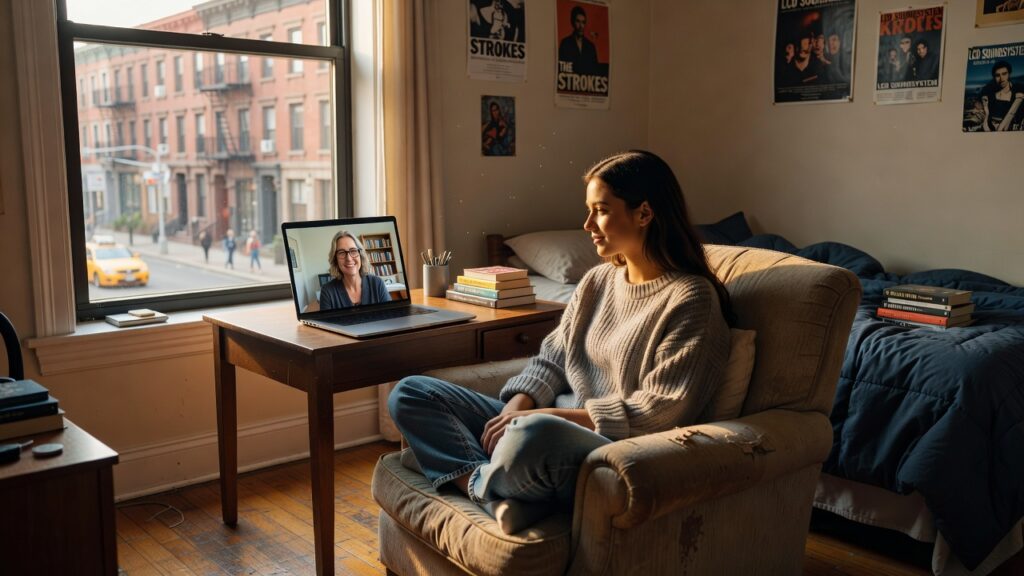
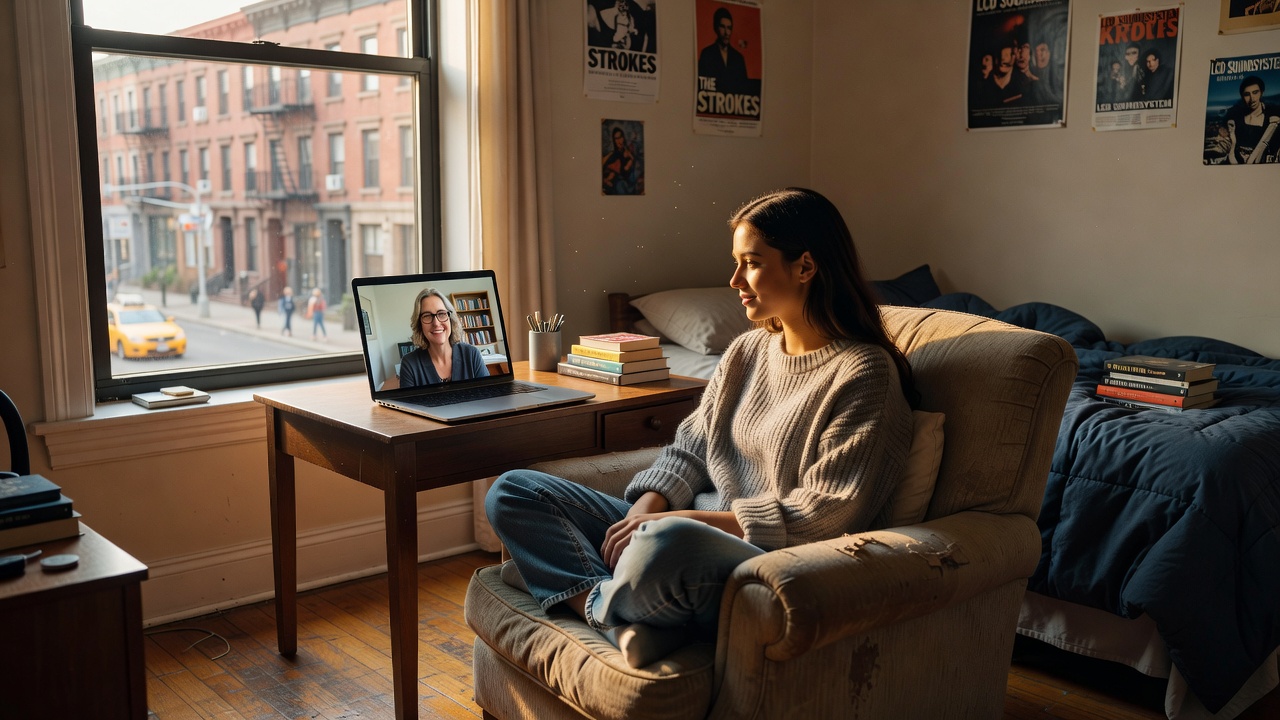
For the teenager in question, the first contact with a telehealth psychiatric practice happened on her mother’s phone. She sat in her bedroom, the same room where she’d been spending most of her time for months. The screen showed a provider’s face. There was no waiting room, no unfamiliar office smell, no other patients in the hallway. For a young person already struggling to leave the house, that difference mattered.
At Legendary Online Psychiatry, the intake process for telehealth psychiatry in New York is conducted by video. A licensed psychiatric provider conducts an evaluation that covers the patient’s history, current symptoms, any medications already tried and what the patient and family are hoping to understand or address. This is not a brief screening. It’s a clinical conversation.
For this particular patient, the evaluation helped clarify that her school avoidance was connected to anxiety symptoms that had been building since middle school, not simply adolescent mood shifts. The provider discussed options with the family, including whether medication might be appropriate to consider, and made clear that no prescription would be written without the family’s informed understanding and agreement. That transparency mattered to a mother who had worried about being pushed toward medication without explanation.
It’s worth noting that telehealth psychiatry is appropriate for many conditions but not all. Providers will typically screen for safety concerns during intake. If a patient is in crisis or requires immediate in-person evaluation, a telehealth provider may refer to in-person or emergency services rather than proceeding remotely. Families should confirm a practice’s crisis protocol before beginning care.
The Solution: What Access to Telehealth Psychiatry Actually Changed
New York State expanded Medicaid telehealth coverage permanently following the COVID-19 pandemic, and in 2026 that coverage continues to apply to psychiatric evaluations and ongoing medication management sessions conducted by video. For this Sunset Park family, that meant the out-of-pocket cost for initial and follow-up visits was covered through the daughter’s existing Medicaid enrollment. The mother didn’t have to choose between a psychiatric appointment and a utility bill.
New York State Medicaid covers outpatient mental health services including telehealth therapy sessions, which means families should ask any prospective provider directly whether they accept their specific Medicaid plan and what the billing process involves. Coverage details vary by plan type, so verifying before the first appointment is the right step.
For the teenager, attending appointments from home removed the barrier that had stopped every previous attempt at care. She was more willing to speak candidly in a familiar space. Progress wasn’t immediate, and her providers made clear that psychiatric treatment involves ongoing assessment rather than a single fix. But she returned to school part-time within a few months of beginning care, something her family hadn’t expected to see that quickly.
What Made the Difference in This Case
Several things overlapped to make telehealth psychiatry work for this family in a way that in-person care hadn’t.
The absence of a commute mattered. So did the speed of access. Waiting eleven weeks for an in-person appointment, in a situation that was already affecting school attendance and daily functioning, would likely have meant the family gave up on the process entirely.
The ability to conduct part of the intake in Spanish was significant. Psychiatric evaluation depends on accurate self-reporting. When a patient has to translate their internal experience into a second language in real time, nuance gets lost. Families seeking telehealth psychiatry in New York should ask prospective practices directly whether bilingual providers or interpreters are available, rather than assuming.
Finally, the format itself reduced stigma. The daughter didn’t have to tell friends or neighbors that she was going to a psychiatric appointment. She sat in her own room. That privacy, for a teenager already feeling exposed and anxious, made participation possible.
The CDC reports depression affects more than 21 million American adults annually, and that number doesn’t count the adolescents who are cycling through symptoms that go unrecognized and untreated. For families in Sunset Park and across Brooklyn, telehealth psychiatry in New York represents a real option, not a lesser version of care.
If your family is considering this kind of evaluationLegendary Online Psychiatry provides telehealth psychiatric services to New York residents. Confirm with the practice directly what insurance plans they accept, what age ranges they serve and what their process looks like for initial evaluations.
Additional resources that may be useful for families navigating related needs: Autism ABA Therapy Services Utah and Free Food With Medicaid.
Frequently Asked Questions About Telehealth Psychiatry in Sunset Park, Brooklyn
Can a teenager in Brooklyn get a psychiatric evaluation through telehealth, and does Medicaid cover it?
In most cases, yes, though the specific age range a practice accepts varies. New York State Medicaid covers telehealth psychiatric services including evaluations and medication management. Families should call any prospective practice before scheduling to confirm that the provider accepts their specific Medicaid plan and that they serve the patient’s age group. Coverage rules can change, so verifying with both the insurer and the practice directly is the right step.
Is telehealth psychiatry appropriate for someone who is currently in crisis?
Telehealth psychiatry is generally suited for outpatient care, which means it’s designed for people who are stable enough to participate in a video consultation. If someone is in acute crisis, experiencing thoughts of self-harm or in immediate danger, the right first contact is a crisis line (such as 988) or an emergency room, not a telehealth intake form. Most telehealth practices screen for safety during intake and will refer to higher levels of care when needed. Ask any practice you contact what their protocol is if a patient’s condition escalates between appointments.
How is a telehealth psychiatric evaluation different from online therapy?
Psychiatry and therapy are different services even when delivered by video. A psychiatrist is a medical doctor (or psychiatric nurse practitioner, depending on the practice) who can diagnose psychiatric conditions and prescribe medication when appropriate. A therapist provides talk-based treatment but typically cannot prescribe. Some patients need both. A telehealth psychiatric evaluation focuses on diagnosis and, if relevant, medication options. If a provider determines that therapy is also indicated, they’ll often discuss that separately or provide a referral. Confirm with any practice exactly what services their providers are licensed to deliver.
Related from Legendary Online Psychiatry: Online Psychiatrist in Astoria, Queens · Online Psychiatrist in Jackson Heights, Queens
Care we provide
Telehealth Psychiatry for Astoria, Queens Residents · Online Medication Management for Astoria, Queens Residents · Virtual Psychiatrist NYC · Primary · Online Psychiatrist Bronx
Communities we serve
Bronx, Ny · Bronx Newyork · Bronx, Ny · Bronx, Ny · Jackson Heights, Queens · Flushing, Queens · Jamaica, Queens · Astoria Queens 11