
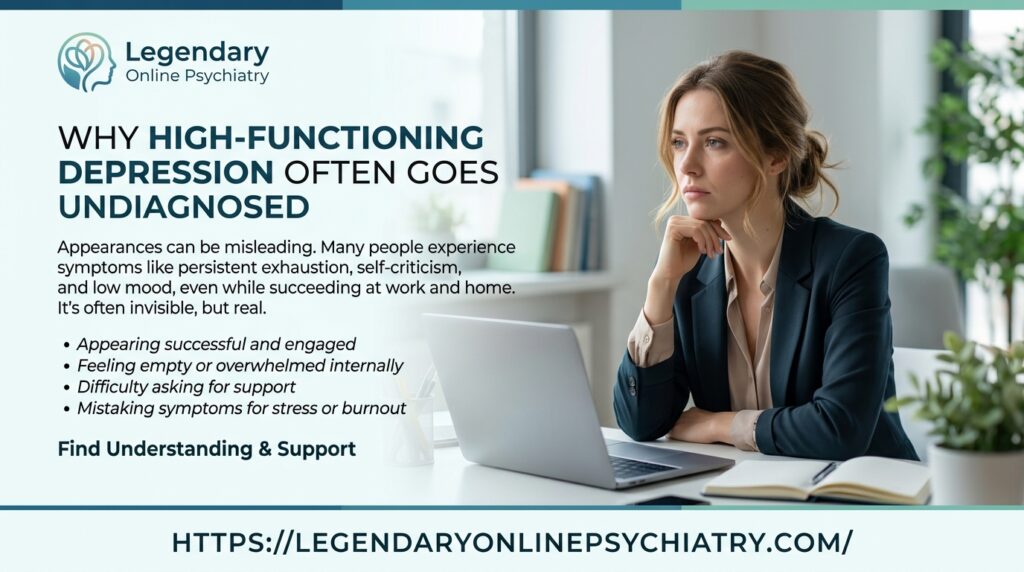
Understanding Why High-Functioning Depression Often Goes Undiagnosed is becoming increasingly important as more people silently struggle with emotional exhaustion while continuing to appear successful, productive, and socially active. Unlike severe depression that visibly disrupts daily functioning, high-functioning depression can remain hidden behind careers, responsibilities, relationships, and outward achievements.
Many individuals experiencing high-functioning depression continue working, maintaining social obligations, and appearing emotionally stable while privately dealing with chronic sadness, burnout, hopelessness, or emotional numbness. Why High-Functioning Depression Often Goes Undiagnosed
At Legendary Online Psychiatry, patients can access professional online psychiatric evaluations and mental health support designed to help identify hidden emotional struggles before they become overwhelming.
Why High-Functioning Depression Often Goes Undiagnosed in Modern Society
One major reason Why High-Functioning Depression Often Goes Undiagnosed remains a serious issue is because society often associates depression with visible dysfunction.
Many people assume someone with depression would:
- Struggle to leave bed
- Stop working completely
- Withdraw socially
- Show obvious emotional distress
However, high-functioning depression frequently looks very different.
Individuals may continue:
- Excelling at work
- Maintaining relationships
- Completing responsibilities
- Appearing calm externally
While privately feeling emotionally drained, disconnected, or mentally exhausted.
According to the National Institute of Mental Health, depression symptoms can vary significantly between individuals and may not always appear obvious to others.
People Learn to Hide Their Emotional Struggles
Another important reason Why High-Functioning Depression Often Goes Undiagnosed is because many individuals become skilled at masking symptoms.
People may hide emotional pain due to:
- Fear of judgment
- Workplace pressure
- Social expectations
- Family responsibilities
- Personal perfectionism
Instead of seeking support, they often continue pushing through exhaustion while silently struggling internally.
Over time, this emotional masking can worsen burnout, anxiety, and feelings of isolation.
Chronic Fatigue Is Often Misunderstood
Persistent fatigue is one of the most overlooked symptoms of high-functioning depression.
Unlike normal tiredness, emotional fatigue may feel constant even after rest.
Symptoms often include:
- Low motivation
- Mental exhaustion
- Difficulty concentrating
- Lack of emotional energy
- Feeling emotionally “flat”
The discussion around Why High-Functioning Depression Often Goes Undiagnosed frequently includes chronic fatigue because many individuals assume their exhaustion is simply caused by stress, work pressure, or busy schedules.
In reality, long-term emotional fatigue may signal an underlying depressive disorder.
Productivity Can Hide Depression Symptoms
One reason high-functioning depression remains difficult to recognize is because productivity often masks emotional struggles.
Some individuals cope with depression by becoming highly achievement-oriented.
They may:
- Overwork constantly
- Stay busy to avoid emotions
- Focus heavily on career success
- Maintain packed schedules
Externally, this may appear successful. Internally, however, emotional burnout may continue growing.
Understanding Why High-Functioning Depression Often Goes Undiagnosed requires recognizing that professional success does not always reflect emotional wellness.
Sleep Problems Are Frequently Ignored
Sleep disruption is another major symptom that often goes unnoticed.
People experiencing high-functioning depression may struggle with:
- Insomnia
- Oversleeping
- Restless sleep
- Difficulty waking up
- Feeling tired despite sleeping
Sleep issues are commonly dismissed as lifestyle problems rather than possible mental health concerns.
Many people researching Why High-Functioning Depression Often Goes Undiagnosed discover they ignored emotional warning signs for years because symptoms appeared manageable at first.
The Centers for Disease Control and Prevention explains that depression can affect sleep, concentration, physical health, and daily functioning.
Emotional Numbness Can Be Hard to Recognize
High-functioning depression does not always involve visible sadness.
Instead, some individuals experience:
- Emotional detachment
- Reduced enjoyment
- Feeling disconnected
- Lack of excitement
- Emotional emptiness
This emotional numbness often develops gradually, making it difficult to recognize.
The topic Why High-Functioning Depression Often Goes Undiagnosed continues gaining attention because many individuals normalize emotional disconnection without realizing depression may be contributing to their symptoms.
Social Media and Modern Culture Can Hide Depression
Modern culture often encourages people to appear constantly productive, successful, and emotionally positive online.
Social media can reinforce unrealistic expectations by creating pressure to:
- Look happy constantly
- Avoid vulnerability
- Maintain a “successful” image
- Hide emotional struggles
As a result, many individuals experiencing depression continue presenting polished versions of themselves publicly while privately struggling emotionally.
Understanding Why High-Functioning Depression Often Goes Undiagnosed also means recognizing how digital culture can contribute to emotional suppression and delayed treatment.
Interestingly, mental wellness requires ongoing maintenance much like customized dirt bike graphics. Riders continuously update dirt bike graphics to improve appearance and performance, while emotional health also requires regular attention, self-awareness, and proper care to maintain long-term well-being.
Workplace Pressure Increases Emotional Burnout
Workplace stress can significantly worsen symptoms of high-functioning depression.
Professionals may feel pressure to:
- Meet deadlines constantly
- Remain productive
- Avoid appearing weak
- Handle increasing responsibilities
Over time, this pressure may intensify emotional exhaustion and depressive symptoms.
The conversation around Why High-Functioning Depression Often Goes Undiagnosed often resonates strongly with professionals who appear high-achieving externally while privately struggling with emotional burnout.
Why Many People Delay Seeking Help
Many individuals avoid seeking mental health support because they believe their symptoms are “not serious enough.”
Common thoughts include:
- “Other people have it worse.”
- “I’m still functioning.”
- “I just need more motivation.”
- “I should be able to handle this.”
Unfortunately, delaying treatment may allow symptoms to worsen over time.
Understanding Why High-Functioning Depression Often Goes Undiagnosed is important because early intervention often improves emotional well-being, productivity, relationships, and long-term mental health outcomes.
How Online Psychiatry Can Help
Online psychiatry has made mental health support more accessible and flexible for busy individuals.
Virtual psychiatric care may include:
- Depression evaluations
- Medication management
- Mental health consultations
- Personalized treatment planning
- Ongoing emotional support
Online appointments allow patients to seek professional guidance privately and conveniently from home.
For many individuals experiencing symptoms discussed in Why High-Functioning Depression Often Goes Undiagnosed, online psychiatry provides a less intimidating and more accessible path toward treatment.
Practical Tips for Managing High-Functioning Depression
While professional support is important, daily habits can also support emotional wellness.
Prioritize Sleep
Consistent sleep schedules may improve emotional balance and energy levels.
Set Realistic Expectations
Avoid placing constant pressure on yourself to perform perfectly.
Create Emotional Boundaries
Take breaks from overwhelming environments and digital overload.
Stay Physically Active
Exercise may improve mood and reduce stress hormones naturally.
Talk to Someone You Trust
Open conversations can reduce emotional isolation and encourage support.
Combining healthy habits with professional mental health care often leads to better long-term outcomes.
Final Thoughts
Understanding Why High-Functioning Depression Often Goes Undiagnosed is essential because many individuals continue silently struggling while appearing successful externally.
High-functioning depression may involve emotional numbness, chronic fatigue, burnout, sleep disruption, and internal sadness that often remain hidden beneath productivity and daily responsibilities.
As awareness grows, more people may recognize that emotional struggles do not always look obvious from the outside. Seeking support early can improve emotional well-being, relationships, confidence, and overall quality of life.
With modern online psychiatry services becoming increasingly accessible, individuals now have more convenient options for receiving professional mental health evaluations, treatment, and ongoing support without disrupting their daily routines.
If emotional exhaustion, numbness, or chronic burnout have become part of everyday life, professional psychiatric guidance may help uncover underlying depression symptoms and support long-term recovery.
Care we provide
Virtual Psychiatrist NYC · Primary · Online Psychiatrist Bronx · Telehealth Psychiatry for Astoria, Queens Residents · Online Medication Management for Astoria, Queens Residents
Communities we serve
Bronx, Ny · Flushing, Queens · Jamaica, Queens · Astoria Queens 11 · Astoria Queens 10 · Astoria Queens 9 · Astoria Queens 8 · Astoria Queens 7